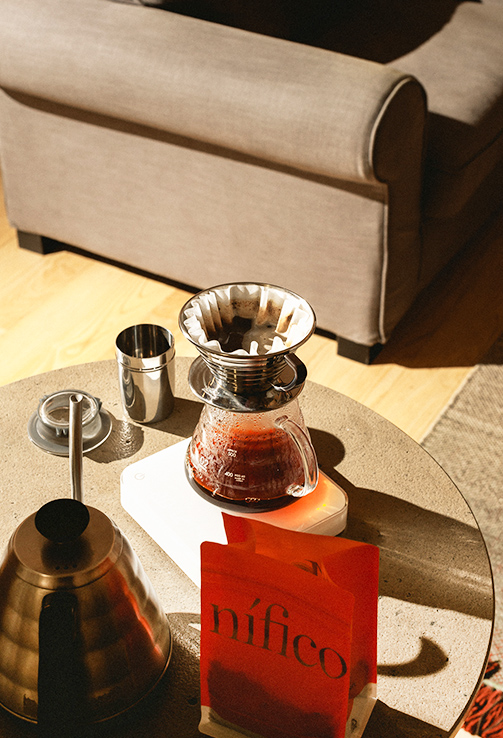
Currently, the filter method is booming both at home and in speciality coffee shops. That’s why we want to tell you about the common mistakes made when preparing filter coffee.
In recent years, filtering has become a ritual appreciated for its cleanliness in the cup and its ability to showcase the character of each origin.
Of course, this same ability means that any variation, from the grind to the water temperature, has a direct impact on the cup. That’s why it’s so important to master the technique: understanding how extraction works, detecting the most common mistakes and knowing how to correct them is the key to enjoying more balanced, aromatic and consistent coffees.
At Cafés El Magnífico, we are specialists in speciality coffee and have mastered the art of filter brewing. Here, we want to warn you about those common mistakes when preparing filter coffee that can ruin your cup. Let’s get started.
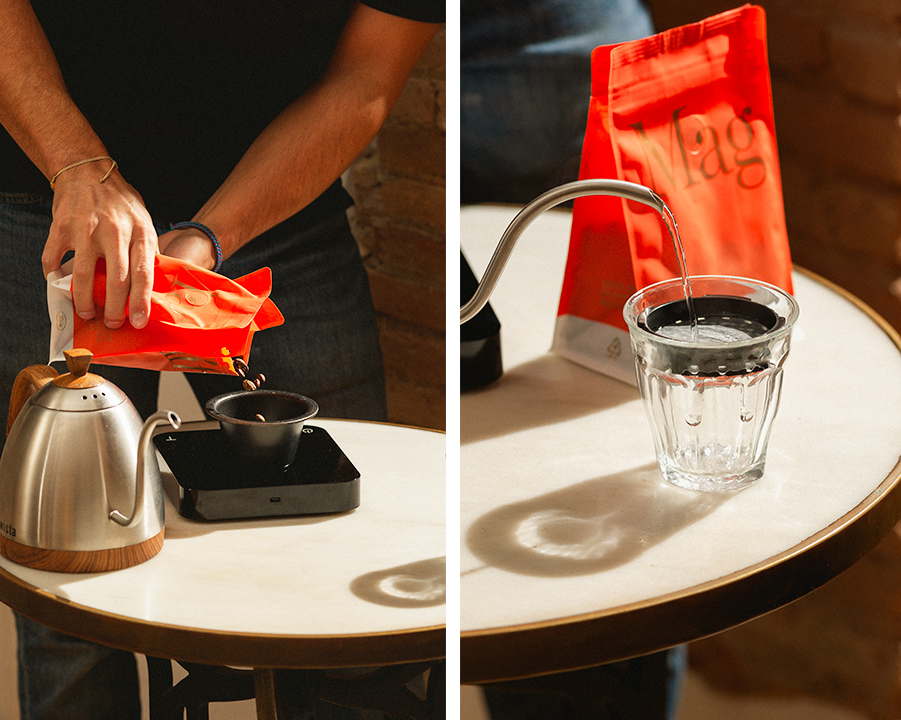
Common mistakes when making filter coffee
Take note and avoid mistakes to make a good cup of filter coffee.
1. Using an inappropriate grind
The grind is certainly the basis of a good extraction. When it is too fine, the water takes longer to pass through the coffee bed: the result is usually a bitter, heavy and over-extracted drink. If, on the other hand, the grind is too coarse, the water passes through too quickly and produces a watery, flat coffee with no character.
Each method has its own requirements: a V60 requires a medium grind, a Kalita a slightly coarser grind, and a Chemex benefits from an even coarser grind. Adjusting the grind size according to the method—and the recipe—is key to getting the most out of your coffee.
2. Not controlling the water temperature
Of course, temperature is just as important as the grind. Water that is too hot can extract bitter and drying compounds. Water that is too cold produces acidic cups that lack sweetness and body.
The ideal range is usually between 88 °C and 94 °C. If you do not have a kettle with temperature control, simply bring the water to the boil and let it rest for about 30–40 seconds before pouring. With this simple practice, your results will improve significantly.
3. Ignoring the coffee/water ratio
Of course, the recipe matters. A lot. Preparing coffee ‘by eye’ makes each cup different and often leads to inconsistent results. A classic ratio is 1:15 or 1:16 (1 g of coffee for every 15–16 g of water).
From there, you can adjust to your taste: a more concentrated ratio will result in a more intense cup, while a higher ratio will be lighter and more delicate. The key is to weigh both ingredients to maintain a clear and replicable reference.
4. Not pre-wetting the filter or performing a poor pre-infusion
Two simple gestures that radically change the result. Rinsing the filter removes the paper taste and warms the coffee maker, promoting a more stable extraction.
Pre-infusion—the famous bloom—hydrates the coffee, expels trapped gases, and prepares the bed for the water to be distributed evenly. A common mistake is to add too much water or pour it abruptly: just add three times the weight of the coffee and wait about 30 seconds.
5. Pouring water without technique
It is clear that pouring is the most artisanal part of filtering. If the water falls too forcefully, it drags the coffee bed and breaks its homogeneity. If it falls at a fixed point, it creates irregular extraction channels.
The ideal is to pour in circular, constant and controlled movements, either in pulses or in a single continuous flow, depending on the recipe. This technique promotes even extraction that respects the coffee’s profile.
6. Using poor-quality water
It is clear that water makes up almost 98% of the final drink. Therefore, choosing poor-quality water is one of the common mistakes made when preparing filter coffee. Water that is too hard, too soft or with excess minerals can completely ruin a high-quality coffee.
As a general guide, low to medium mineralisation usually gives good results, maintaining a balance between sweetness, clarity and texture.
7. Not cleaning the equipment properly
Coffee oils tend to build up easily and, if not removed, can impart rancid and unpleasant flavours. The same is true of calcified water deposits.
Therefore, washing the coffee maker, server, jug and all accessories after each use ensures that each extraction starts with a clean slate. For methods with metal or plastic parts, a more thorough weekly cleaning also helps to maintain the freshness of the flavours.
8. Not adjusting the recipe to the coffee used
At Cafés El Magnífico, we know that every coffee is unique. Origin, variety, processing, roasting and freshness all influence how it should be prepared. A more acidic coffee may benefit from a slightly finer grind. A sweeter, fuller-bodied coffee may need a slightly lower temperature or a different ratio.
Therefore, the key is to observe, take notes and adapt the recipe according to the character of the coffee. A small change can bring out nuances that would otherwise go unnoticed.
9. Final recommendations for improving your filter coffee
Before finishing, we have compiled the main tips for achieving optimal results.
- Always weigh the coffee and water.
- Adjust the grind, temperature and ratio until you find your ideal setting.
- Maintain a smooth and steady pouring technique.
- Use good quality water.
- Clean the equipment after each use.
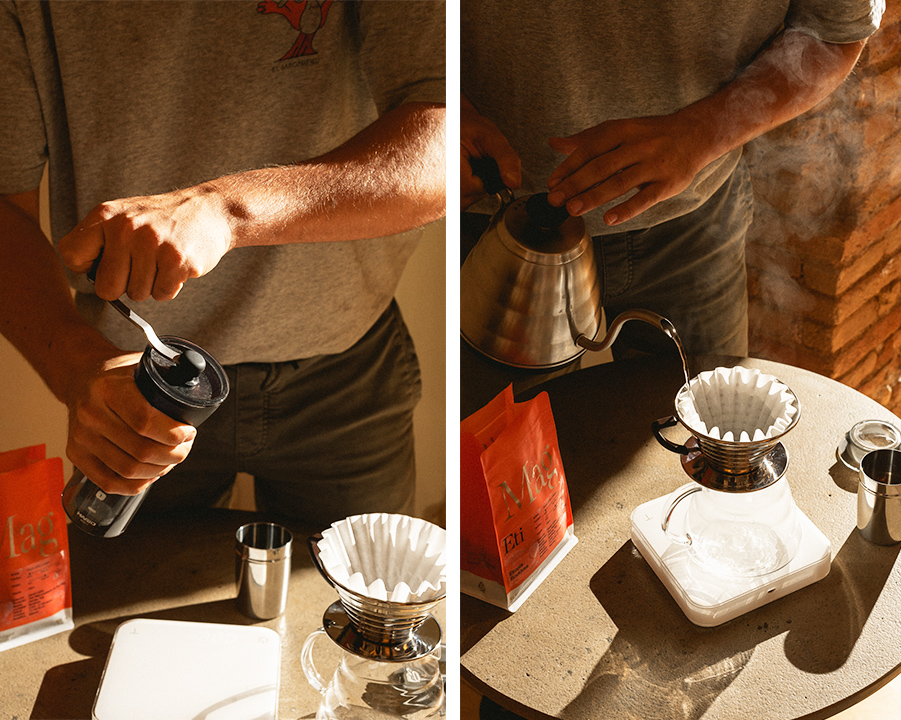
Cafés El Magnífico offers you the highest quality filter coffee
As you can see, avoiding common mistakes when preparing filter coffee does not mean complicating the ritual, but rather understanding it better. Once you have mastered these details, filtering will become a method you will want to practise every morning.
If you want to continue perfecting your technique, we invite you to explore the different types of coffee makers available in the Cafés El Magnífico catalogue. We have filter models and other systems. Take a look and find machines designed to accompany you cup by cup.