Ruanda Women
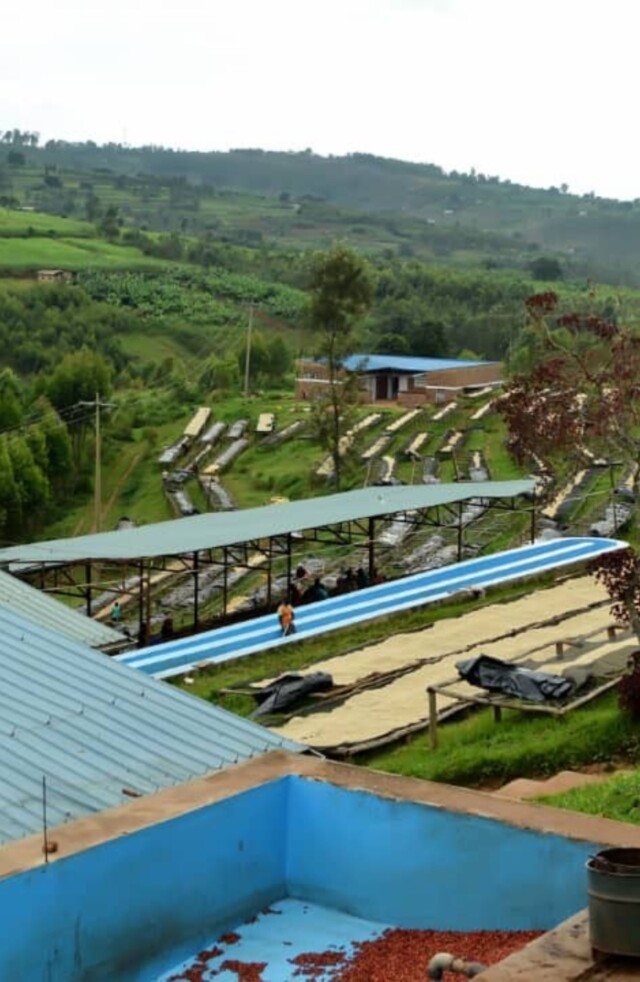
Washing station
This fully washed lot comes exclusively from producers who supply the Mbizi washing station, operated by Gihanga Coffee Company in the Kamonyi district. Mbizi is located at approximately 2,200 meters above sea level, making it one of the highest-altitude washing stations in Rwanda. Gihanga works with over 3,000 smallholder farmers in the region. These producers cultivate Bourbon coffee trees, and their farms average 4 hectares in size.
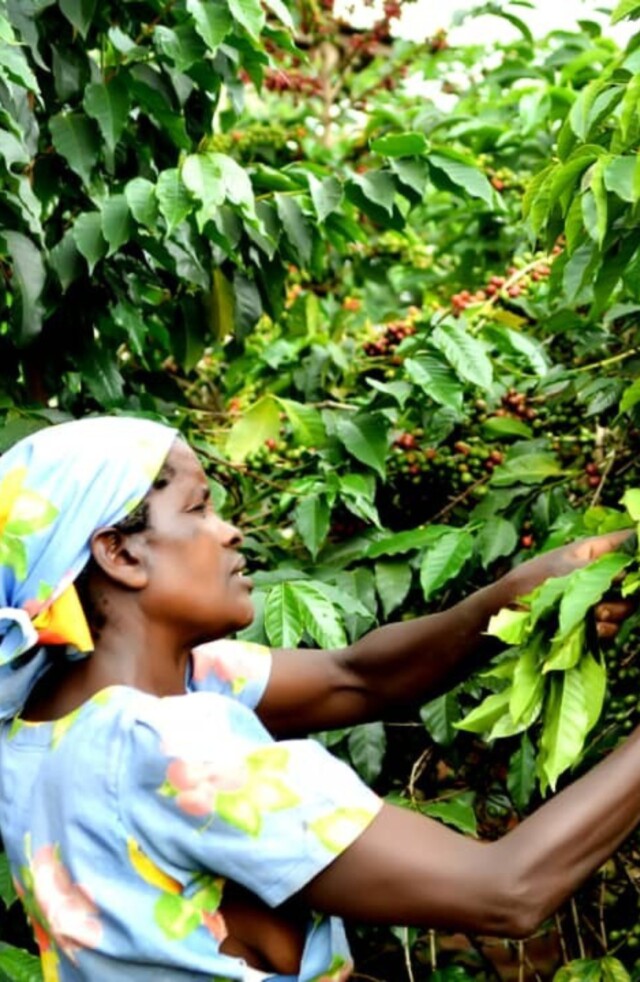
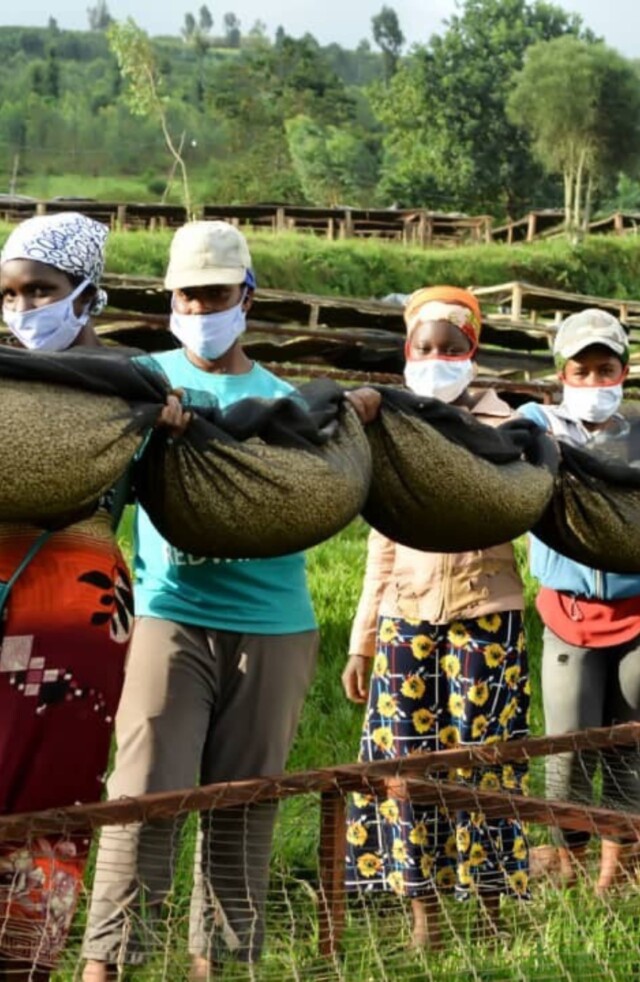
The Women Coffee Extension (WCE) Association brings together women farmers to empower them with new economic opportunities through integration into the coffee value chain. The goal is to teach them how to earn a living through their own products as a vehicle for generating social change in their lives.
Many of these women are widows or orphans of the 1994 Genocide and have had to earn a living and support their families on their own. WCE’s latest projects are life insurance for farmers and also contribute to the distribution of drinking water.
Process Method
The coffee cherries are hand-selected by the farmers who deliver them to the Mbizi washing station. As a first step, all the cherries are placed in water to separate them into floaters and first-grade cherries. Once this sorting is done, the high-density cherries are hand-sorted to remove any visible defects.
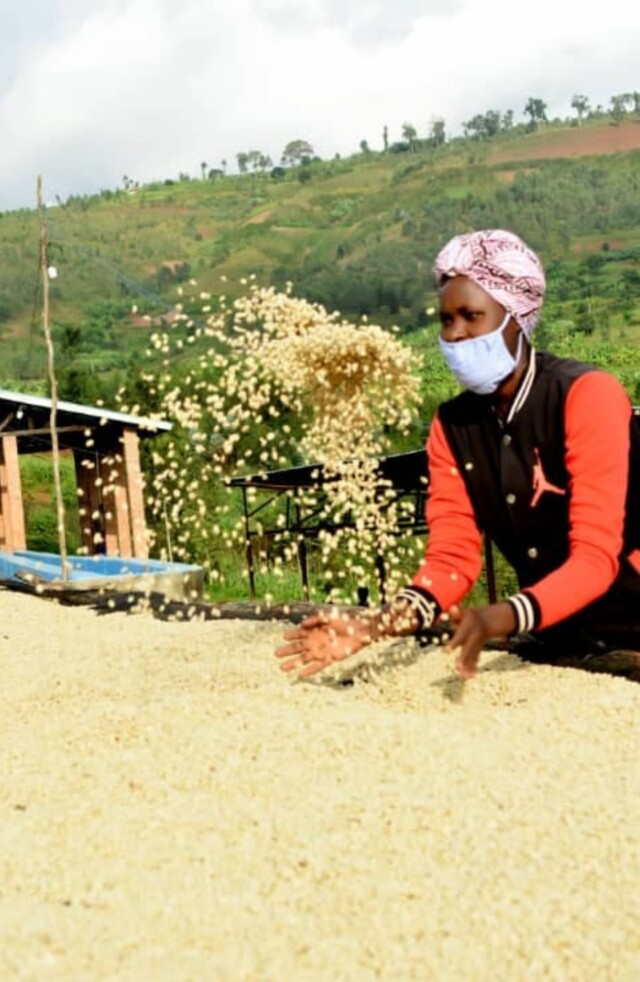
After this, the cherries are taken to a disc pulper before being placed in fermentation tanks. The beans are dry-fermented with the mucilage for 20 to 24 hours. After this time, the wet parchment is washed with clean water and laid in very thin layers on raised African drying beds for sun drying. To ensure even drying, the coffee is turned periodically. This drying process lasts approximately 22 days.
Origin
Introduced in 1904 by German missionaries, coffee in Rwanda has an important history. There, the climate, altitude and the pre-eminence of the Bourbon variety give it unequalled qualities in cup.
At the beginning of the 90s coffee was its most lucrative product of export: about 45 thousand tons left the country and gave sustenance to many small farmers. In 1994, tremendous genocide killed the lives of nearly a million people and destroyed Rwanda’s economy by eliminating much of the specialized knowledge needed to grow and export successfully.
Today, the country produces less than half the coffee it exported in 1990. However, despite the tragic events that have shaken its recent history, Rwanda retains its enormous potential in the coffee sector.
In order to rebuild agricultural institutions, production capacity and human capital, the PEARL (The Partnership for Enhancing Agriculture in Rwanda through Linkages) was designed in 2000. Thus, small coffee growers can sell directly to expert buyers receiving high prices for their exceptional product.
Today approximately 420,000 people are directly or indirectly related to the coffee industry. The prices of quality coffee are more stable than the prices of commercial coffee, which has improved the quality of life of many coffee growers and their families. In addition, coffee also contributes to the reconciliation of the main ethnic groups: Hutus and Tutsis; since we have seen them working together, shoulder to shoulder, to produce more and better coffee.
10,50 € – 42 €
Free shipping from €40 purchase