

Costa Rica Brumas del Zurquí
The Farm
Finca El Centro is one of the farms belonging to Brumas del Zurquí, a family-run micromill located in Costa Rica’s Central Valley, in the subregion of Heredia, led by Juan Ramón Alvarado Rodríguez and his family, representing the fourth generation of coffee producers.
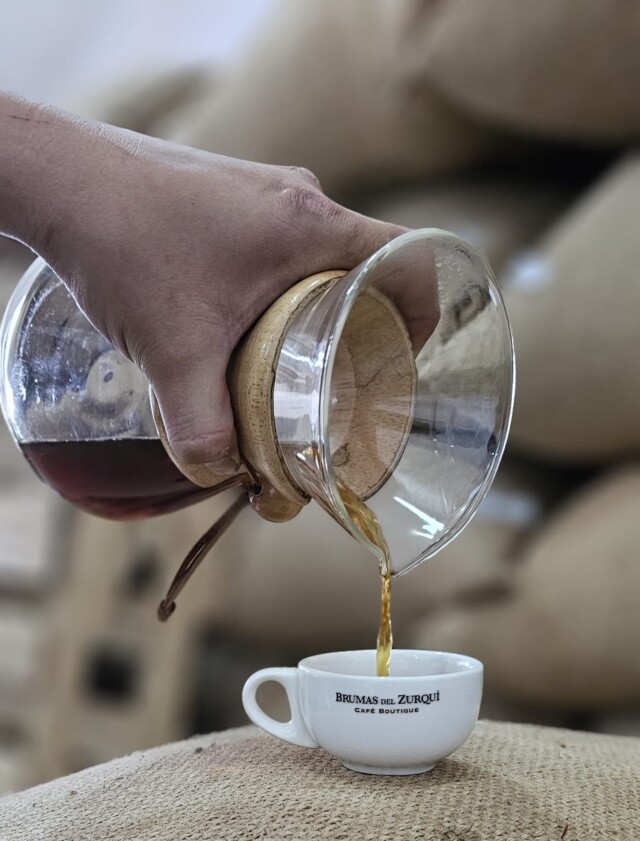
The farm’s history is marked by a trajectory of innovation and commitment to quality and local development. Since the early 2000s, they have invested in specialized infrastructure, building a cupping laboratory and their own roastery which, together with their processing facilities, allows them to maintain rigorous quality control and consistency in every lot.
Brumas del Zurquí receives cherries from neighboring farms grown at elevations ranging between 1.400 and 1.800 meters with different varieties. Despite challenges such as labor shortages in recent years, Juan Ramón remains strongly committed to his craft, generating local employment and promoting a positive social and economic impact within his community.
Their philosophy goes beyond cultivation: they invite those who work with their coffees to roast with intention and to enjoy coffee with optimism, transmitting the passion and care that infuse every stage of the process, from seed to cup.
They were winners of the Cup of Excellence in 2012 and consistently ranked among the top three positions in 2013, 2014, 2015, and 2016.
Process Method
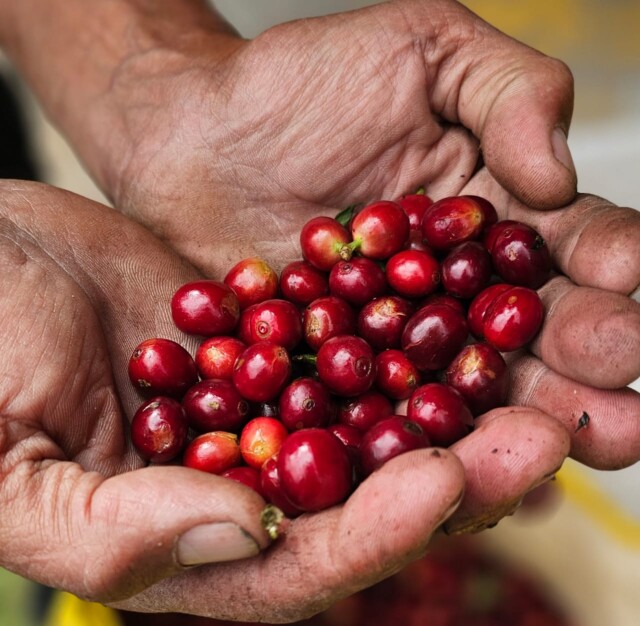
The cherries are harvested at their optimal point of ripeness and taken to the pulper. Once the skin and pulp are removed, the beans are placed on raised drying beds for 20 to 30 days to carry out the Honey process. This means the beans are dried in the sun with the mucilage still attached.
After the drying period established by the farm, the beans are placed in bags for resting.
Origin
Coffee was planted in Costa Rica in the late 1700s, and it was the first Central American country to have a fully established coffee industry; by the 1820s, coffee was a major agricultural export with great economic significance to the population.
In 1933, the national coffee association, ICAFE (Instituto del Café de Costa Rica), was established as an NGO designed to assist with the agricultural and commercial development of the Costa Rican coffee market. It is funded by a 1.5% export tax on all Costa Rican coffee, which contributes to the organization’s $7 million budget, used for scientific research into Arabica genetics and biology, plant pathology, soil and water analysis, and oversight of the national coffee industry. Among other things, ICAFE exists to guarantee that contract terms for Costa Rican coffee ensure the farmer receives 80% of the FOB price (“free on board”, the point at which the ownership and price risks are transferred from the farmer/seller to the buyer).
Costa Rica contributes less than 1% of the world’s coffee production, yet it has a strong reputation for producing relatively good, if often mild quality. One way that Costa Rica has hoped to differentiate itself among coffee-growing nations is through the diversity of profiles in its growing regions, despite the country’s relatively small geographical size.
Protected by mountain ranges on the Pacific slope, the Tarrazú region is a sanctuary for mystical and forest birds and producer of one of the best coffees that is cultivated in small valleys and hillsides. Coffee growing is the fundamental activity for the socio-economic development of the region.
Tarrazú represents almost 35% of the total coffee production in Costa Rica. The altitudes of 1.200 – 1.900m produce some of the most complex coffee profiles in Costa Rica. This region has been the cradle of some of the most impressive advances of coffee processing in the country, whose result is very clear coffee. In Tarrazú around 22.000 hectares are cultivated in small farms with an average size of 2.5 hectares.
Coffee has been grown in Costa Rica since 1779. Currently the regions that produce the best qualities are Tarrazú, West Valley and the Central Valley. In the last decade coffee production has been threatened due to a real estate boom, turning coffee farms into developable land. San José, the capital, is right in the heart of the Central Valley, where private houses are located next to the coffee farms. The value of these lands has now skyrocketed.
12 € – 48 €
Free shipping from €40 purchase