At Cafés El Magnífico we work with speciality coffee right from the source and accompany the bean through every stage of its journey. That is why, today, we want to focus on a fundamental element within the world of coffee: the coffee plantation and the natural environment that surrounds it.
Beyond being the place where coffee grows, the coffee plantation forms part of a complex ecosystem that directly influences the quality of the bean, biodiversity and the environmental balance of producing regions.
A coffee plantation is a farm dedicated to growing coffee, consisting of rows of coffee trees that thrive in warm, humid climates. These areas are usually found in tropical and mountainous regions, where altitude, rainfall and temperature favour the development of the fruit.
In addition to their agricultural function, coffee plantations create landscapes of great natural and cultural value, as they coexist with shade trees, local wildlife and traditions linked to coffee harvesting and production.
The 5 most common coffee farming systems
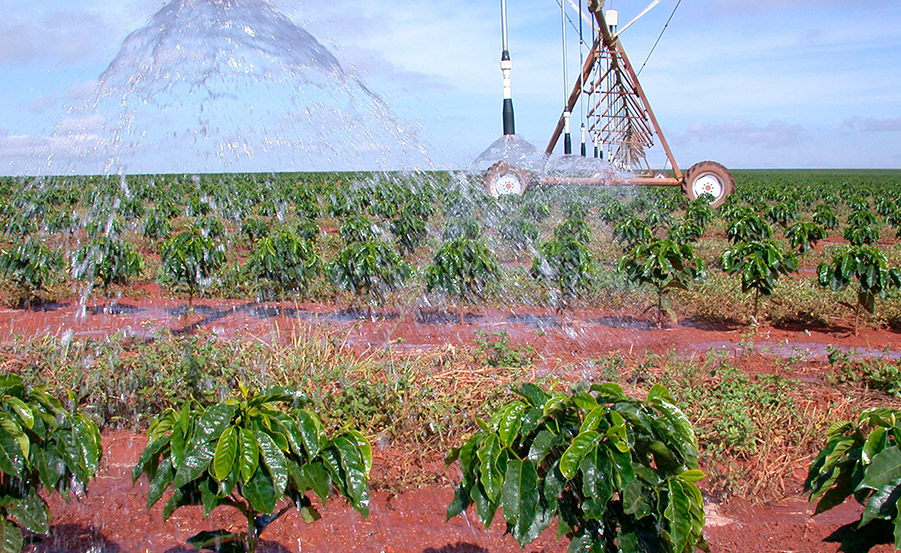
Coffee farming systems are extremely diverse, both in terms of their physical characteristics and their agronomic management. We find highly intensive systems, such as coffee monoculture practised with very little or no shade. We also find highly extensive systems that practise polyculture and incorporate medicinal trees, fruit trees and leguminous trees. There are also systems with an intermediate management model.
Depending on their diversity, complexity and management intensity, five main types of systems can be distinguished:
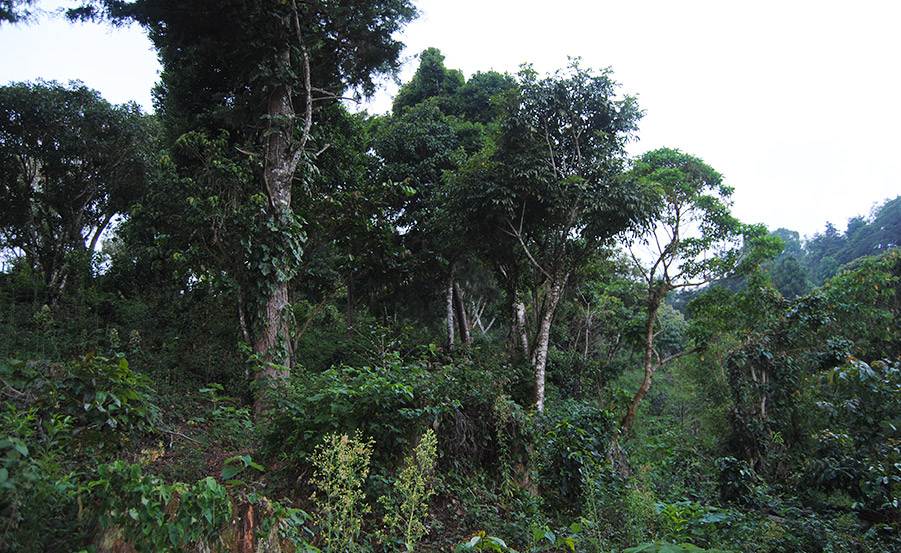
- Traditional or rustic coffee, where the coffee plant is planted beneath the existing forest with minimal alteration to the canopy. This system has practically disappeared or is tending to disappear.
- Traditional polycultured coffee, where the coffee plant is grown beneath a forest canopy that is less dense than in the previous system but often enriched with forest species of medicinal or practical value.
- Commercial polyculture coffee, where fruit trees and banana plants predominate.
- Coffee under specialised and highly controlled shade provided by one or two forest species, generally legumes.
- Pure-culture coffee, where shade is completely eliminated.
The coffee plantation as an agroforestry system
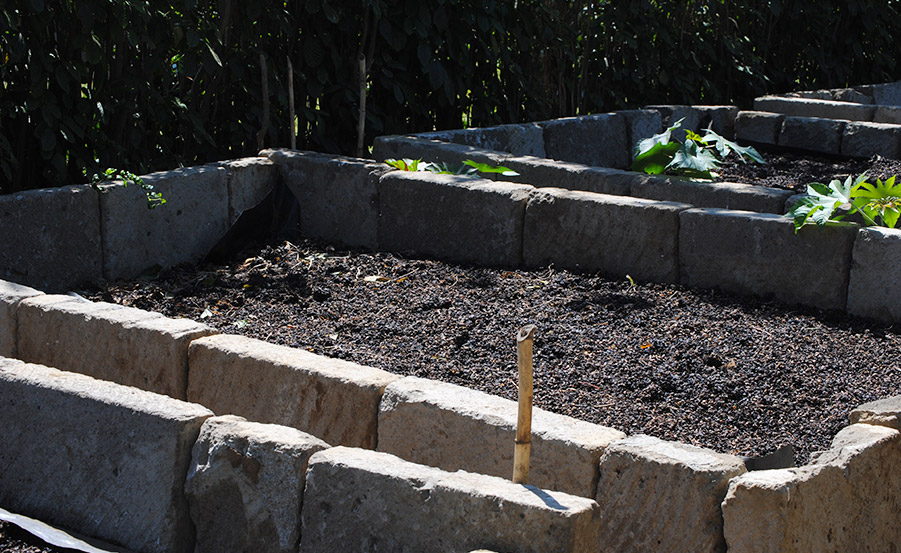
Coffee cultivation, as an agroforestry system, is an excellent option for farmers due to its long-term stability and low risk, as well as its short-term productivity and profitability. Furthermore, on mountain slopes where staple crops do not thrive, coffee is an excellent alternative.
Shade trees create a microclimate conducive to the growth and production of coffee plants. Temperature fluctuations are moderated by the presence of the trees; they are less than 5°C during hot periods or more than 2°C above the average minimum temperature. The soil is not affected by extreme temperatures, which limits its drying out during the dry season and keeps the coffee plant’s root system in favourable conditions for the absorption of water and minerals.
Similarly, the surface of the coffee plant’s leaves under shade is exposed to less heat, resulting in greater photosynthetic activity. Shade trees also have a regulating effect on coffee plant productivity, as they mitigate the phenomenon of alternate bearing, ensuring a more regular income for the coffee farmer.
The tree canopy also improves the tree’s longevity, as the shade limits flowering and coffee tree production, thereby reducing the premature death of branches or the entire tree—as sometimes occurs in full sun due to heavy fruit loads on the coffee tree.
Biodiversity and protection of the natural environment
Most of the cultivated land is situated on hillsides and in wooded areas which also harbour ecosystems that are important for their genetic diversity, their function as biological corridors, their role in mitigating the effects of extreme weather, their role in protecting water sources, and their aesthetic beauty.
A shade-grown coffee farm is a biodiverse agricultural system and plays a vital role in combating deforestation. These shade-grown coffee farms help to conserve soil, river basins, forests and natural habitats, whilst providing a varied diet and medicinal plants for family use.
Coffee forests help capture carbon, generate oxygen and provide a better living environment for workers. The temperature improves and a favourable microclimate is created. Shade-grown coffee provides firewood and is an excellent habitat for wildlife such as birds and earthworms, which fertilise and oxygenate the soil.
The importance of shade trees in coffee plantations
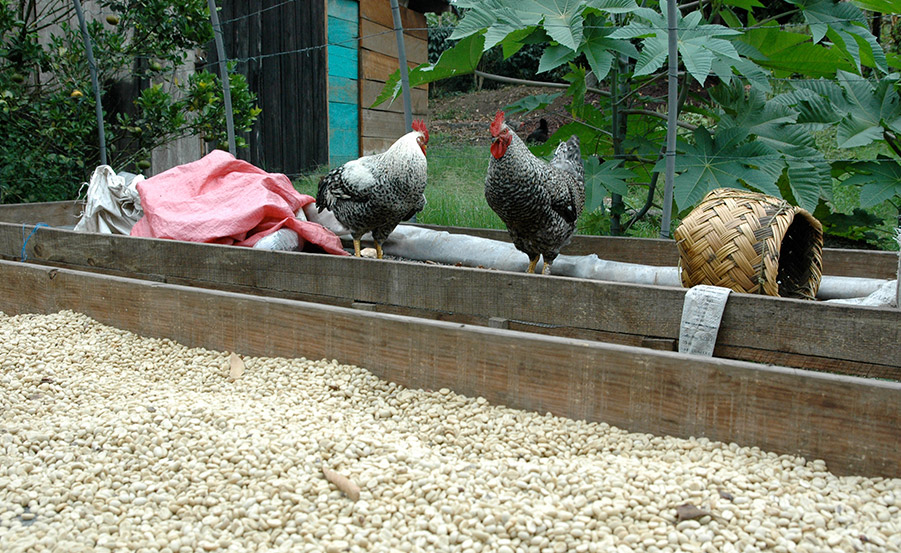
There are two general considerations when developing shade criteria: the health and productivity of the farm, and the requirements for the conservation of forests and specific species.
In terms of farm health, on the one hand we have the benefits of shade per se: reduced solar stress, nitrogen contribution, leaf litter cover on the ground, and protection of the microclimate. On the other hand, there are the detrimental effects of too much shade: excess moisture and reduced coffee tree production. Thus, the optimal level of shade and the most beneficial species vary according to the region, microclimate and farm.
The use of shade trees on coffee farms generates multiple benefits for farmers and the land: diversity and abundance of birds and other animals; the presence of leguminous trees, which indicate soil fertility and health, as well as the health of wildlife and the microclimate.
The tree species used for shade are often valuable for their timber, fruit or grains, which provides an additional income and increases food security for families. A shaded coffee plantation on steep slopes offers excellent protection against erosion, particularly in areas with soft volcanic soils.
Coffee plantations and their role in ecological balance
Coffee plantations have become the largest contiguous area of trees, providing significant protection for the natural resources of certain countries. This is of great importance because the coffee agrosystem acts as a link to other natural areas. It thus provides a continuous corridor for animal and plant species, which is essential for ecological balance.
As for coffee quality, shade is a major advantage as it ensures proper and uniform ripening of the bean, facilitating the development of the coffee’s sugars and aromatic compounds.
Various studies have shown that the presence of shade trees guarantees better coffee quality. This is evident in terms of its biochemical composition (caffeine, fat content, etc.), its physical characteristics (grain thickness and density), and, finally, its organoleptic properties, due to a reduction in fruit load and an extension of the ripening period.
Reforestation and carbon sequestration
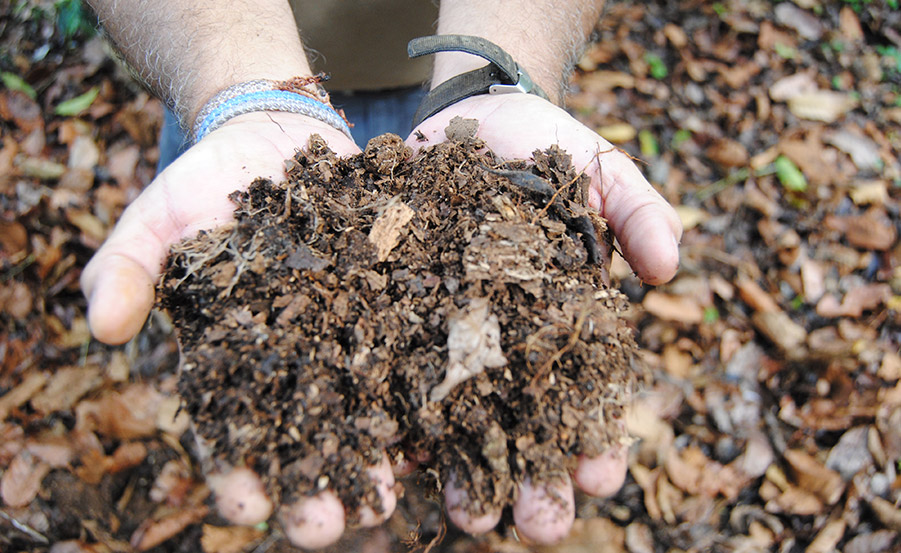
Carbon dioxide emissions are the main component of greenhouse gases. Industrial processes account for 75% of global carbon dioxide emissions, but deforestation also plays a part. Maintaining and improving forest systems is therefore seen as a way of mitigating the effects of global warming. Not surprisingly, they store 20 to 100 times more carbon per hectare than grasslands and cropland.
As coffee and cocoa are grown in the shade of other trees, they offer the opportunity to ‘sequester’ carbon.
Climate scientists regard reforestation, particularly in the tropics, as one of the most practical and least costly means of combating global warming. By planting trees that provide shade for coffee or cocoa, farmers can remove carbon dioxide (CO2) – the greenhouse gas most responsible for global warming – from the atmosphere and store it in the forest.
As well as helping to mitigate the effects of global warming, reforestation contributes to the conservation of biodiversity. It undoubtedly helps coffee farmers to improve the quality of their beans, and provides firewood, building materials, fruit and other forest products. Finally, it protects the watersheds that supply drinking water.
In Central America, planting trees on coffee plantations increases the carbon stock in biomass from 10 tonnes per hectare to 30 tonnes per hectare compared to coffee monoculture.
Discover speciality coffee from Cafés El Magnífico
At Cafés El Magnífico, we believe that understanding the origin of coffee also means understanding the natural environment in which it grows. The coffee plantation not only influences the final quality of the cup, but also the biodiversity, the landscape and the communities that depend on coffee farming for their livelihood.
If you’d like to continue exploring the world of speciality coffee, we invite you to browse our catalogue and discover coffees carefully selected at source to offer the best possible cup experience.