
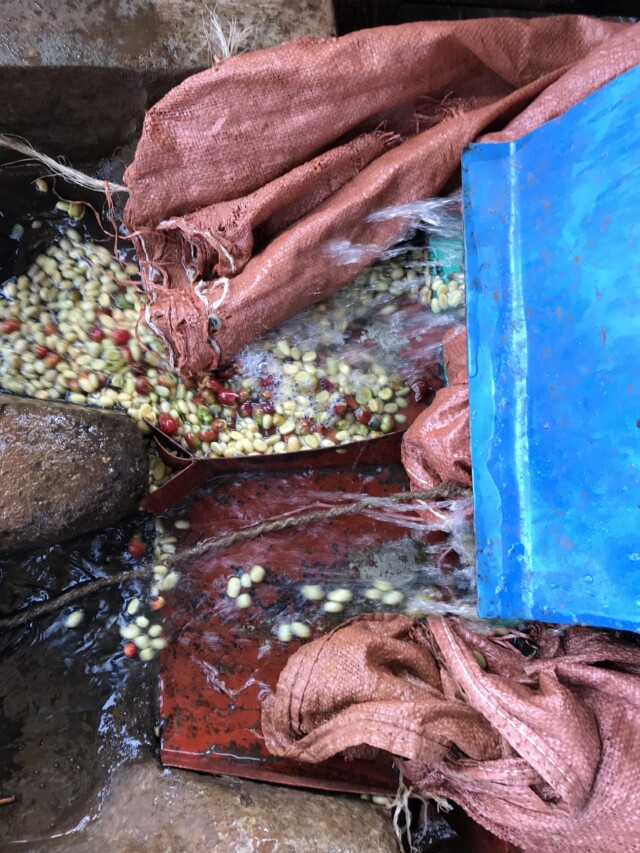
Etiopía Mustefa Abakeno
Washing Station
Mustefa Abakeno is a coffee producer from the Jimma region in western Ethiopia, where he manages an approximately 18-hectare farm located at around 2,040 meters above sea level. His work represents a combination of Ethiopian coffee tradition and a modern vision focused on continuous quality improvement.
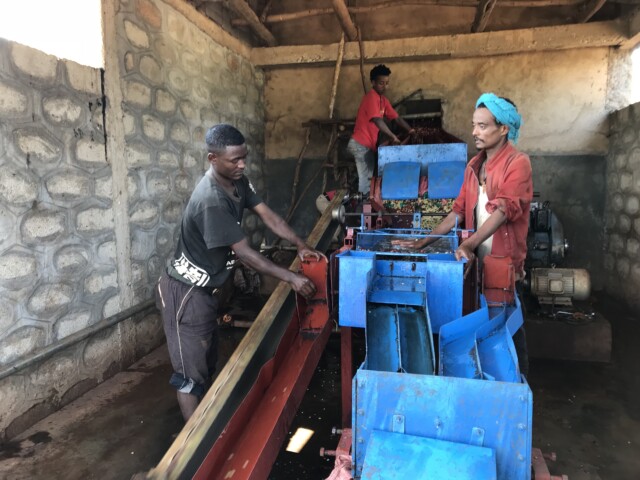
On his farm, he cultivates different varieties developed by the renowned Jimma Research Center, adapted to the altitude and climate conditions of the region. From the beginning of his project, Mustefa focused on controlling the processing stage, acquiring his own coffee pulper and developing the capacity to produce high-quality washed coffees.
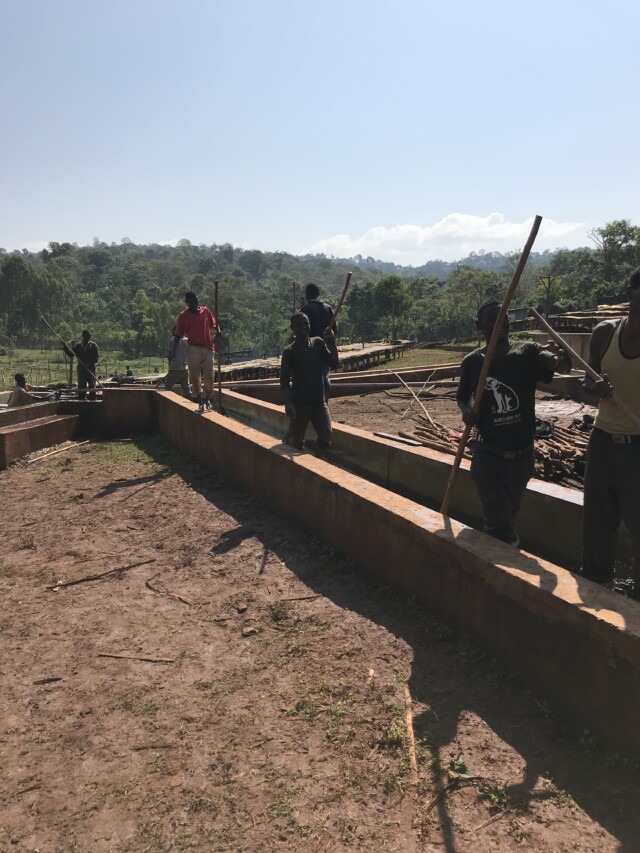
In 2018, he began his journey as an independent exporter following regulatory changes that allowed Ethiopian producers to work directly with international buyers. To support this, he established the Beshasha wet mill, where he processes both his own coffee and cherries from neighboring smallholders, strengthening the local economy and creating more direct and transparent relationships within the supply chain.
The addition of agronomist Harun in 2021 brought significant improvements both on the farm and at the washing station, including technical training for local farmers, drying improvements, and agronomic trials aimed at increasing productivity and coffee quality.
Mustefa has also invested heavily in infrastructure and quality control, developing a field laboratory and building a modern warehouse in Agaro to optimize the processing of natural coffees. More recently, he expanded his cherry purchasing network with new collection points in Echamo, Jarso, Badeyi, and Saadi, consolidating a project that combines quality, innovation, and community development.
Process Method
The coffee is hand-harvested, selecting only cherries at peak ripeness. Processing is then carried out under strict control at both the Beshasha and Kabira washing stations, carefully supervising every stage to ensure uniformity and cup cleanliness.
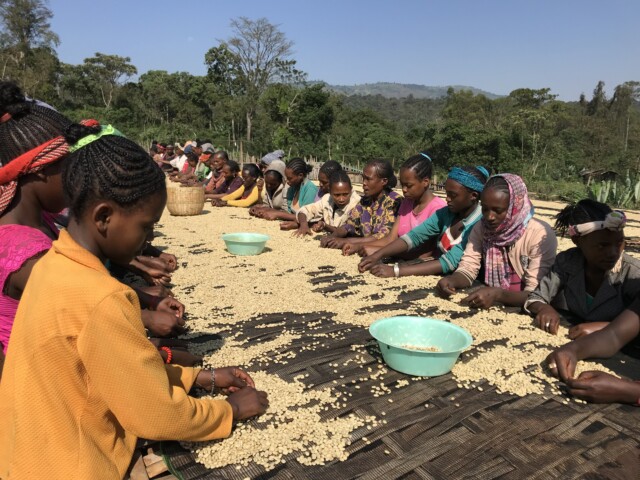
Drying takes place on raised African beds, where lots are separated and individually monitored, constantly controlling moisture levels and drying speed. Shade nets are also used during the hottest hours of the day to protect the coffee and promote more even drying.
This meticulous approach allows for coffees with outstanding aromatic clarity, complexity, and a clean, refined expression of Jimma’s terroir.
Origin
Ethiopia is widely known as the cradle of coffee. Already in the X century, the Ethiopians crossed the mountains eating red cherries from trees of wild coffees. It is from this indigenous plant that Arabica coffee spread worldwide.
Ethiopia is the first coffee producer in Africa and the sixth in the world. This accounts for almost 70% of its export revenues and employs approximately 15 million Ethiopians. There is one main crop per year that takes place between November and February. More than half of Ethiopian coffee is produced in small plots of land around the coffee grower’s house known as the ‘coffee gardens’. Only 5% of Ethiopian coffee is produced in large estates and tend to be low altitude plantations in the west of the country. Ethiopia makes use of both processing methods, washed and unwashed, with a wide variety of varieties and cultivars producing some of the most magnificent and unique coffees in the world.
Guji is an area in the Oromia region of southern Ethiopia. The majority of the residents of this region are Oromo and speak the Oromo language, which is completely different from the main language of Ethiopia, Amharic. Like many of the coffee regions of the country, the culture of the Guji Zone varies from woreda to woreda. The main source of fresh water in the area is the Ganale Dorya River, which also acts as the border line with the neighboring Bale area to the east.
To the west, Guji borders the southern Gedeb woreda of the Gedeo Zone in neighboring South Nations, Nationalities and Popular Region, part of the Yirgacheffe coffee growing area.
10,50 € – 42 €
Envío gratuito a partir de 40€ de compra. (Península y Baleares)