When we talk about single-origin coffees, we are also talking about the land, the climate, tradition and innovation. That is why, at Cafés El Magnífico, we want to explore Cerrado Mineiro, one of Brazil’s most iconic coffee-growing regions, internationally renowned for the quality and character of its coffees.
The Cerrado Mineiro region
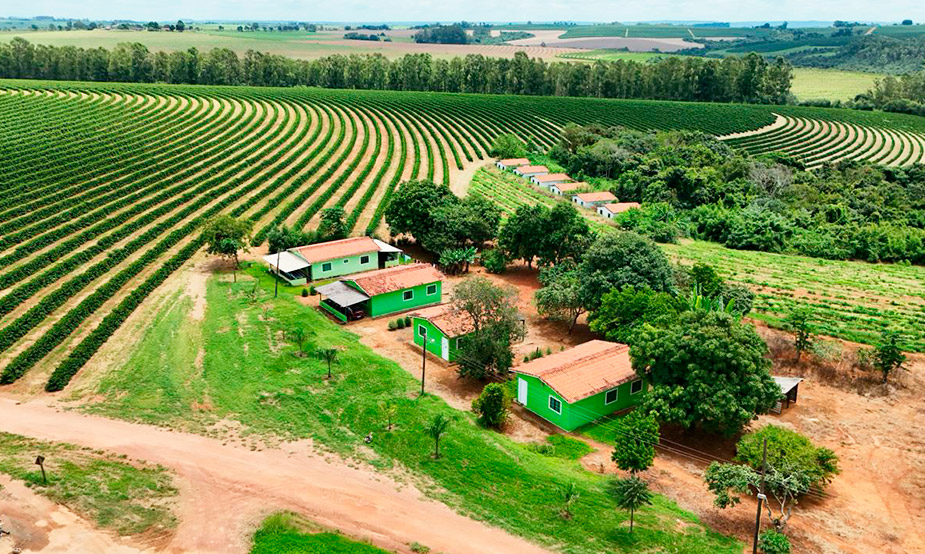
The Cerrado Mineiro region was the first coffee-producing region in Brazil to be granted a designation of origin, following a decree issued by the Government of Minas Gerais in 1995. There are 55 municipalities located in Alto Paranaíba, Triângulo Mineiro and the north-west of Minas Gerais that grow Cerrado Mineiro coffee.
For coffee production, areas with altitudes ranging from 800 to 1,300 metres above sea level are recommended, which may be equipped with irrigation depending on rainfall patterns. The distinct seasonal climate, with hot, humid summers and mild, dry winters, is ideal for coffee production.
These climatic conditions arise because the Cerrado region is located in a continental area, which results in a rainfall pattern different from that of other Brazilian coffee-producing regions, which are directly influenced by oceanic air masses.
The History of Coffee in Cerrado Mineiro
The first coffee growers in Cerrado Mineiro to settle in the region began their activities in 1972 in Patrocínio, according to records from the now-defunct Brazilian Coffee Institute, as until then the area had been considered unsuitable for coffee cultivation.
Attracted by the flat topography of the area, traditional coffee growers from Northern Paraná, São Paulo and Southern Minas Gerais arrived here, believing that in the Cerrado they would be free from one of the greatest nightmares of coffee growers: frost. After the great frost of 1975, the influx of coffee growers to the Cerrado intensified, and the region began to establish itself as the new frontier of Brazilian coffee.
The early years were very tough, difficult and full of disappointments, as many coffee growers mistook the colour of the soil in the Cerrado for the deep red hue of the fertile soils of Northern Paraná and São Paulo, where it is known as ‘terra roxa’. In the Cerrado, however, soils with this reddish hue are the least fertile and therefore require significant soil improvement.
Once they had learnt this lesson, they began to seek and obtain support from research institutions to better understand the climate and soil of the Cerrado. Through the organisation of associations and cooperatives in the region, the arrival of various government research bodies was facilitated, with the result that the Cerrado became the region with the greatest technological innovations in coffee farming in the whole of Brazil.
Innovation, sustainability and the production model
This openness to research is underpinned by the quest for stability in coffee production in the Cerrado Mineiro. In other words: how can high productivity be combined with consistent product quality?
Coffee growers in the Cerrado already know that it is not enough simply to produce; rather, the Cerrado Mineiro coffee production model must follow sustainability principles based on environmental, social and financial sustainability.
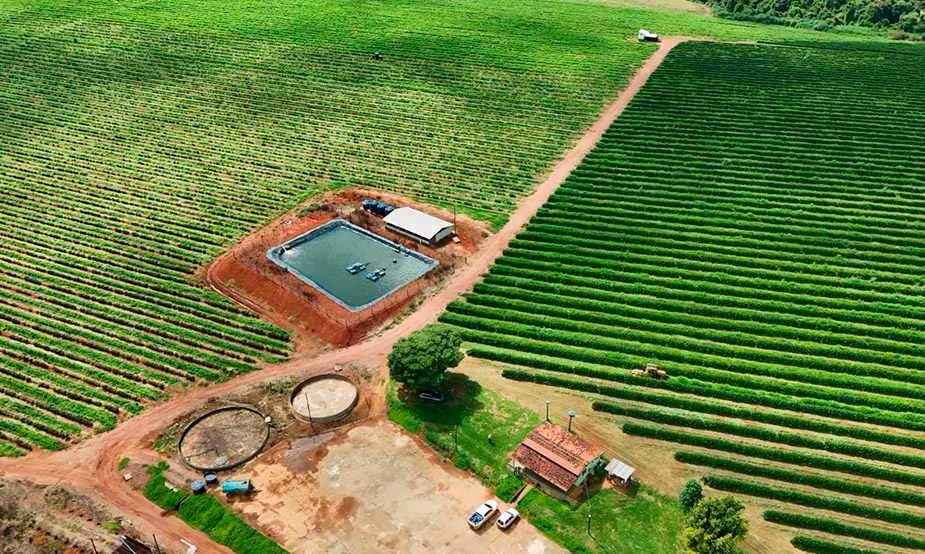
The farms or fazendas maintain an average of over 20% of their total area as a permanent reserve, preserving the region’s rich natural flora. Irrigated plots also make use of treated water.
The Cerrado region, through its organisations, pioneered the social contract model between workers, which serves as the benchmark that is now mandatory throughout Brazil.
Sensory profile of Cerrado Mineiro coffee
The key flavour characteristics of Cerrado Mineiro coffee are as follows:
- intense aroma
- aromatic notes ranging from caramel to nuts
- delicate citrus acidity reminiscent of orange
- a coffee with good structure and body
- a long-lasting chocolatey finish
Coffee characteristics by micro-region
The following table summarises the characteristics of coffee from the Cerrado Mineiro region, based on its geographical location, its altitude—which ranges from 800 to 1,250 metres—and the characteristics of the soil.
| MICRO-REGION | AROMA | FLAVOUR | ACIDITY | AFTERTASTE |
|---|---|---|---|---|
| North and West (requires irrigation) | Rich, with hints of nuts | Full-bodied + | Virtually no citrus acidity | Rich and chocolatey |
| Central (Patrocinio) | Rich, with hints of caramel | Full-bodied | Mild citrus acidity | chocolatey |
| South | Rich, with hints of caramel | Full-bodied | Medium citrus acidity | Chocolatey and fruity |
| East | Intense, with chocolatey notes | Full-bodied | Medium citrus acidity | Chocolatey and fruity |
| Chapadao de Ferro | Intense with floral notes | Full-bodied + | Medium to high citrus acidity | Chocolatey and fruity |
| Northernmost points (secos no pe) | A sweet with hints of nuts | Full-bodied and sweet | Virtually no citrus acidity | Rich and chocolatey |
| Indianapolis | Rich with notes of toasted bread | Full-bodied and smooth | Mild citrus acidity | chocolatey |
Natural coffee drying in Cerrado
Coffee from Cerrado Mineiro benefits from a unique climate. It has a hot, rainy season that allows the fruit to develop, and an extremely dry winter with mild temperatures, which coincides with the harvest period. Furthermore, it is one of the few regions in the world that produces excellent natural coffees—that is, those dried with the parchment still attached.
Light intensity in the Cerrado remains very stable throughout the year, which is why, without exception, all fazendas in the Cerrado dry their coffee on patios in the sun. Thanks to the technical methods developed by coffee farmers in recent years, mechanical dryers are now used solely to ensure greater uniformity in the final drying process.
Adapting to the market and modernising the fazendas
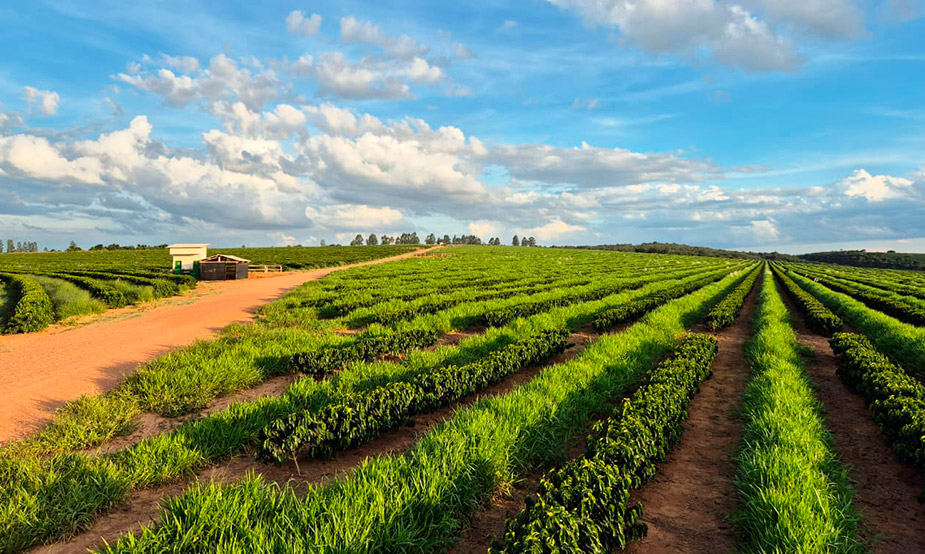
Finally, coffee growers in the Cerrado are working to continuously adapt to current market trends and developments in coffee processing, as well as to modernise their fazendas.
Continue discovering single-origin coffees with El Magnífico
Coffee from the Cerrado Mineiro is a magnificent example of how climate, technical expertise and coffee-growing tradition can give rise to unique and recognisable flavour profiles.
At Cafés El Magnífico, we continue to explore and select single-origin coffees that reflect the character of each region. If you’d like to discover other speciality coffees and delve deeper into the world of single-origin coffee, we invite you to explore our catalogue.