At Cafés El Magnífico, we understand that behind every excellent cup of coffee lies a combination of factors involving both nature — the terroir and the variety — and the knowledge, hard work and dedication of the people who make its cultivation possible.
The genetics of each variety, cultivar, hybrid or mutation play a fundamental role in its aromatic and flavour potential. For this reason, we also include this information in the coffee profiles that you’ll find on our packets.
By working closely with the coffee farmers who grow these plants, we can gain a better understanding of their characteristics, appreciate the quality potential of their beans and gain insight into the challenges involved in their cultivation in the field.
On this occasion, we’re focusing on Chiroso, a variety of Coffea arabica that stands out for its remarkable aromatic and flavour profile. We’ll explore its origins and key characteristics, as well as the factors that enable it to reach its full potential in the cup.
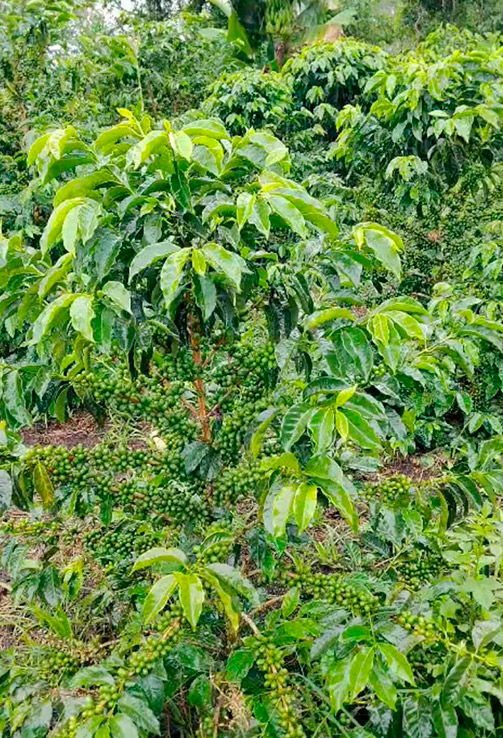
Chiroso
Ethiopia is considered the place of origin and diversity of Coffea arabica (1) and is widely recognised for the quality and diversity of its sensory profiles. Researchers estimate that there are thousands of different coffee genotypes (2) in the country, many of which have not yet been categorised. Until geneticists are able to identify them, they are grouped under the term ‘Ethiopian genetic heritage’ (heirloom).
Ethiopia’s wild and cultivated coffee populations possess genetic characteristics related to disease resistance, adaptation to climate and flavour complexity. These resources are of great interest to coffee breeders worldwide, who need them to develop new, more resilient varieties. Against a backdrop where climate change poses a threat to global coffee production, Ethiopia’s genetic heritage is of vital importance in ensuring the long-term survival of Arabica coffee.
Precisely because of the genetic bottleneck threatening the species, various Ethiopian coffee seeds were transferred to germplasm collections with the aim of studying them, using them in breeding programmes, creating new hybrids, or propagating and cultivating them in other environments to analyse their behaviour.
One such example is the fascinating Geisha (3). Chiroso is another example, as are Sidra, Papayo, Borbón Rosado, Wush Wush and Ombligón. All of these coffees are characterised by a distinct flavour and aroma profile.
An origin yet to be clarified
It is unclear how this excellent variety reached Colombia from Ethiopia. It was initially thought that Chiroso was a natural mutation of Caturra, but with longer cherries and beans. For this reason, many local producers referred to the variety as Caturra Chiroso.
What is known is that when Carmen Cecelia Montoya and her brother bought land to grow coffee in 2008, it had not yet been planted with coffee trees. Starting from scratch, they had to build infrastructure—a warehouse, a washing station—and they needed seeds.
The discovery of Carmen Cecelia Montoya
In a recent article, Christofer Feran (3) explains that “they planted their farm using seeds they had obtained from a neighbour, Oscar Tavares, without really knowing what they were. Carmen had worked as a coffee picker on many of the farms in the region and was well acquainted with the coffee plants on Oscar’s farm—short in stature and producing fruit in dense clusters along the nodes of each branch. For a picker, it was efficient and profitable work; for a grower, it meant high yields even on a small plot of land.”
In 2011, Carmen began growing coffee cherries and sold her coffee to the local co-operative. The buyer there, having learnt where she lived, asked her if she was a neighbour of José Arcadio, a second-generation coffee grower who was well-known and respected in San Carlos. José is indeed her neighbour, so the buyer identified the coffee as Caturra. However, although her trees were similar in height and productivity to Caturra, Carmen noticed that her coffee produced elongated cherries—almost like an elongated Caturra. She called it ‘Caturra chiroso’.
(‘Chiroso’ is a colloquial term in rural Colombia for something slightly flattened. It is not a very common word, but because of the variety’s elongated bean, the growers gave it that name.)
The Cup of Excellence and interest in its genetics
In 2014, Carmen won Colombia’s Cup of Excellence and Chiroso captured the attention of the speciality coffee world. But there was still some way to go. Its aroma and flavour profile was reminiscent of highly expressive Ethiopian coffees. Science had to unravel its origins.
Thus, a 2021 study published in *Genetic Resources and Crop Evolution* used PCR tests to carry out genetic mapping of 137 samples of *Coffea arabica* from known Ethiopian accessions, cultivars from around the world and Yemeni germplasm, including Chiroso.
Described in the study as “a variety grown in Colombia and said to have superior cup quality”, the study revealed that Chiroso coffee was, in fact, “one of those Ethiopian varieties that ‘escaped’ from Ethiopia.”
Science confirms its link with Ethiopia
Another study published in 2024 in the *Journal of Plant Biochemistry and Biotechnology* (4) – “Ensamblaje y caracterización del genoma completo de cloroplastos de las variedades de café colombianas Caturra Chiroso, Bourbon Chiroso y Chiroso“, analysed the chloroplast genomes of Chiroso plants grown in Colombia.
The research found that “each genome has approximately 155,000 base pairs and contains 131 genes, which is consistent with Arabica coffee. Compared with 26 other Arabica varieties worldwide, the Chiroso group formed its own distinct phylogenetic branch.
This indicates a genetically distinct group within Arabica, which shares a maternal lineage that sets it apart from the standard Caturra and Bourbon populations, leaving scope for ongoing agronomic and genetic research to further clarify its classification.”
The study also identified a strong genetic affinity with the eastern Ethiopian Arabica landrace (Berbere). Although the exact historical route of introduction is not fully documented, the evidence suggests that Chiroso is linked to older Ethiopian-type lineages that have adapted over time to Colombian growing conditions.
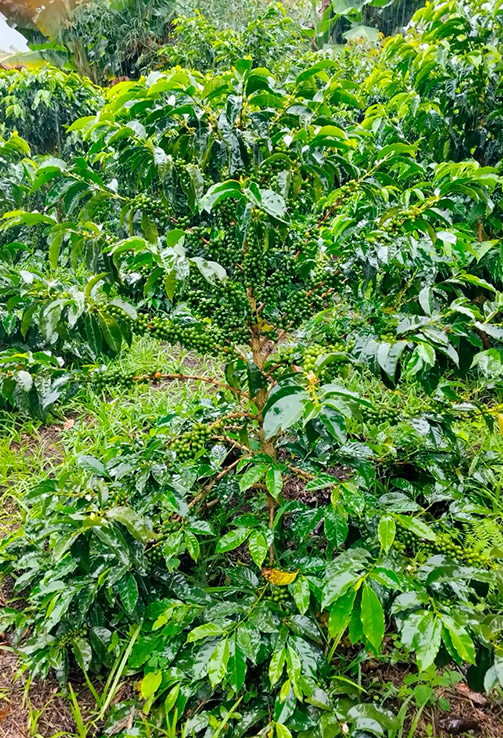
From genetics to the cup
How Chiroso coffee is grown
Chiroso coffee is typically grown at high altitudes of between 1,700 and 2,200 metres, where cooler climates – ranging from 16°C to 19°C – allow the coffee cherries to ripen slowly.
It is a low-growing tree; at this altitude, it is less susceptible to rust and highly productive. The bean is large and pointed.
As with other high-value varieties, such as Geisha or Wush Wush, coffee growers work to keep these coffee plants free from cross-pollination, thereby ensuring the identity of their trees and, consequently, protecting the exceptional quality of their coffees and, in theory, securing better prices for these prized beans.
The role of terroir and the coffee farmer’s work
However, the flavour profile of an exceptional coffee in the cup is not determined by variety and terroir alone. Post-harvest precision plays a decisive role in how Chiroso unfolds.
Careful harvesting, clean fermentation and meticulous washing and drying practices significantly influence the clarity, floral notes and structure of the brew. This is why sensory profiles can vary between coffee growers (5), and why those of exceptional quality reflect not only genetics and terroir but also the producer’s meticulous, artisanal craftsmanship.
The sensory profile of Chiroso coffee
In Chiroso, the combination of all these factors and a light roast reveals a profile in which floral notes blend with those of stone fruit, sweet citrus, honey, pineapple and brown sugar. Its acidity lends freshness and depth when combined with its noticeably sweet flavour.
References:
(1) Historia del café arábica y su expansión por el mundo, Salvador Sans, blog Cafés El Magnífico
(2) Términos del café: Taxonomía, Salvador Sans, blog Cafés El Magnífico
(3) Chistofer Feran, Variedades de variedades e identidades erróneas.
(4) “Ensamblaje y caracterización del genoma completo de cloroplastos de las variedades colombianas de café Caturra Chiroso, Bourbon Chiroso y Chiroso, Coffea arabica L. (Rubiaceae), con perspectivas sobre sus relaciones filogenéticas”. Noviembre 2024. En Journal of Plant Biochemistry and Biotechnology 33(4):710-715
Autores: Mariana Chica-Acosta, Hayler Edu Ibarra Arcila y José Gregorio Martínez de la Institución Universitaria Colegio Mayor de Antioquia
(5) Cuprima, Chiroso, el destacado de la competición colombiana. Historia, ciencia y taza de uno de los cultivares más raros de Colombia.