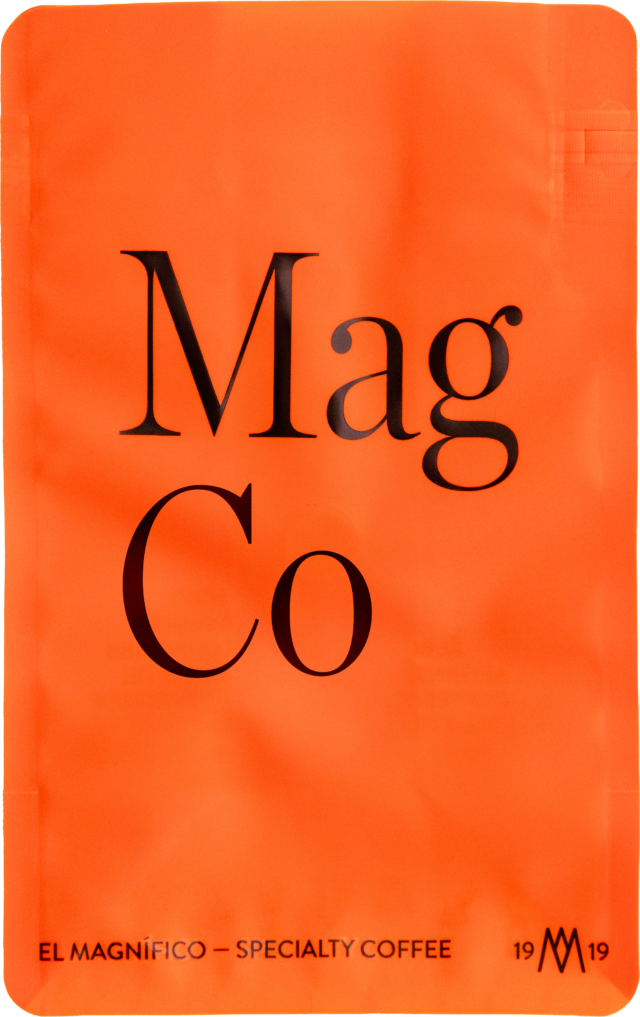
Colombia Chuchilla del San Juan
The Farm
This lot was harvested and processed by an association of 123 coffee-growing families from the Belén de Umbría area and its surrounding communities. In 2008, thirty smallholder producers decided to join forces to market roasted coffee in the local market. It was not until 2016 that they expanded their activities by purchasing coffee cherries from other producers to market parchment coffee.
The association provides its community with training, access to coffee laboratories for cupping, and the purchase of coffee cherries from other producers.
The association has demonstrated that, through collective effort, smallholder farmers can play an active role in the agro-industrial development of the region. To establish the processing center, the producers had to take out a loan and commit their production for several years. As a result, producers remain loyal to the company in which they have invested and risked their own capital.
In 2018, thanks to several loans and sources of financial support, they inaugurated their own wet and dry mill. This innovative processing center enables the daily purchase and centralized processing of coffee cherries, standardizing quality, reducing wastewater, and improving producers’ living conditions.
It also frees up time previously devoted to processing activities. Producers no longer need to build their own mills, benefit from more accurate weighing, receive a better price per kilogram of coffee cherries, and are paid on time. The processing facility uses clean technologies, including innovations such as the Ecomill® system developed by the National Coffee Research Center (Cenicafé), making it one of the first fully ecological facilities of its kind in Colombia.
The association provides training and access to resources while actively promoting sustainability and economic inclusion. Of the 123 member families, 90% are smallholder producers and 30% are women. Some of these women use coffee pulp and mucilage to produce organic fertilizers through vermicomposting.
Their efforts have received national recognition, including the prestigious Emprender Paz Award in 2019, which highlights sustainable initiatives that contribute to peace and economic inclusion in regions affected by violence.
Process Method
Only ripe coffee cherries are harvested and are then taken to the pulping machine. Here, the pulp is removed and the coffee passes through water channels until it reaches the fermentation tanks.
To remove the mucilage, the coffee is submerged in water for approximately 24 hours. After this time, the coffee passes through additional water channels to remove any remaining mucilage that may still be adhering to the beans.
The coffee is then dried on patios, raised beds, or drying canopies.
Once the coffee reaches 11% moisture, it is taken to the Federation’s Cooperative, where each lot is profiled individually.
Origin
The sheer size of Colombia undoubtedly contributes to the different profiles expressed in the cup across its 20 coffee-growing departments (out of a total of 32). However, even within individual growing regions, there are abundant variations due to the microclimates created by the mountainous terrain, wind patterns, proximity to the equator, and, of course, differences in varieties and processing techniques.
The northern regions of the country (for example, Santa Marta and Santander), with their higher temperatures and lower elevations, produce coffees with plenty of body and less brightness. The central “coffee belt,” including Antioquia, Caldas, and Quindío, among others, where most of the country’s production is concentrated, produces easy-drinking, “breakfast blend” styles, with a mild flavor and pronounced sweetness but low acidity.
The southwestern departments of Nariño, Cauca, and Huila tend to have farms at higher elevations, resulting in more complex acidity and greater floral character in the cup profiles.
Cundinamarca is the department surrounding the city of Bogotá, one of the highest-elevation capital cities in the world (2,652 m.a.s.l.).
14,50 € – 58 €
Envío gratuito a partir de 40€ de compra. (Península y Baleares)